HIDE Exterior Covers Blog
Published by
Skimmer Lids Pty Ltd
on
Future-Proofing Hardscapes: How Architects Can Resolve Access Without Compromising Design
Why visual continuity matters in shared outdoor spaces
In premium hardscapes, the surface is part of the architectural experience.
A hotel courtyard, residential podium, pool terrace, rooftop garden, resort walkway or commercial plaza may all rely on carefully selected materials, clean junctions and controlled lines. Large-format porcelain, natural stone, concrete, pavers and decking are chosen to create a particular feeling of quality.
Yet these spaces also need access points.
Drainage, inspection points, skimmer lids, irrigation valves, service hatches and utility openings all have to exist. The problem is that they are often resolved late, using standard covers or grates that interrupt the design.
One mismatched lid can draw attention away from an otherwise beautifully resolved space.
Future-proofing a hardscape means planning these details early, so access remains functional without compromising the visual intent.
The service layer should be designed, not disguised
Every exterior space has a service layer. It manages water, filtration, maintenance, inspection, utilities and infrastructure. When this layer is ignored during design, it usually reappears later as visual clutter.
Raised covers, exposed grates, plastic lids, awkward cuts and misaligned access panels can make a premium surface feel unfinished.
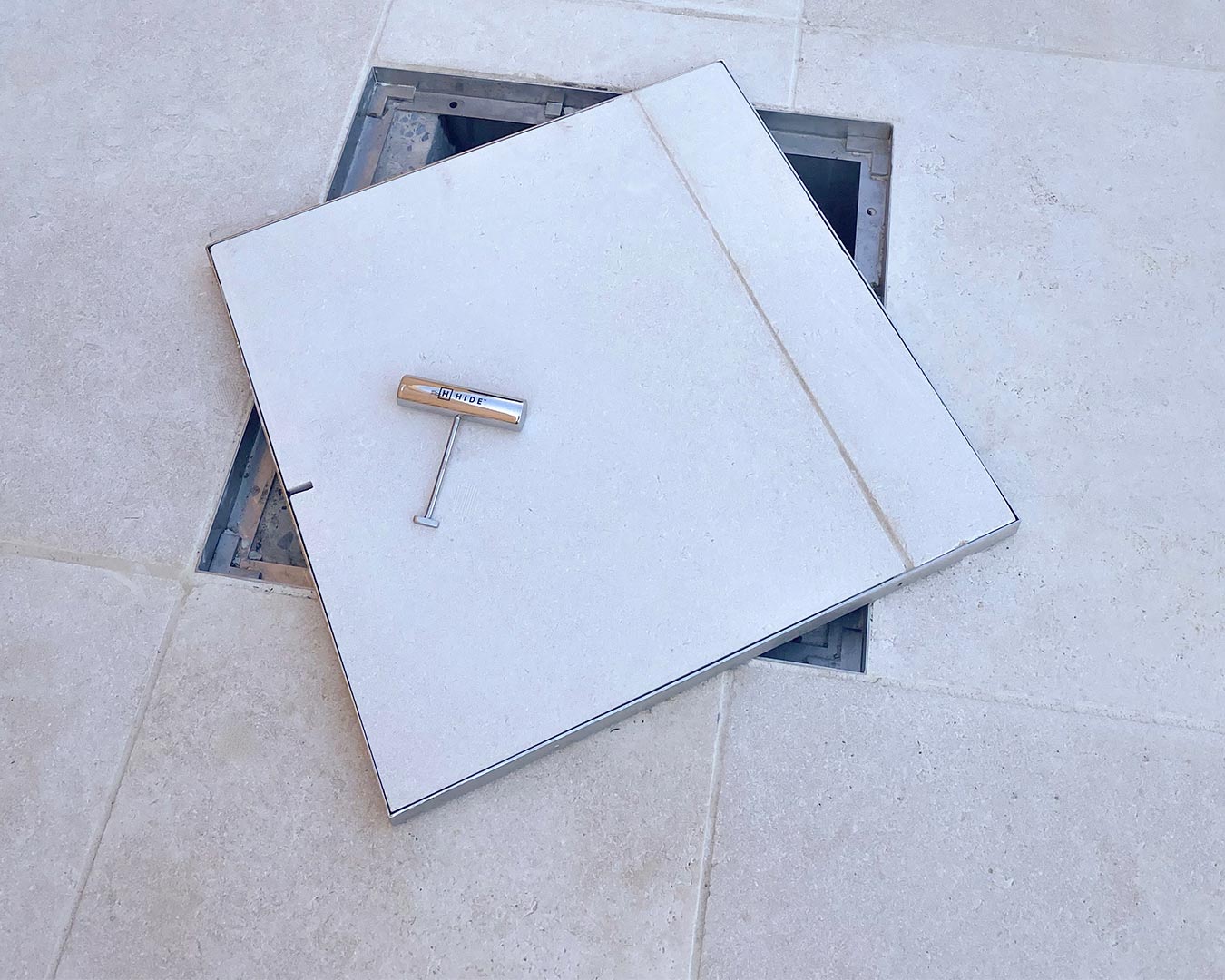
HIDE Covers allow architects and designers to treat the service layer as part of the surface strategy. By accepting an inlay of the surrounding finish, HIDE systems help access covers, drain covers and skimmer lids sit flush and integrate with the material palette.
The goal is not simply to hide access. The goal is to make access intentional.
A cleaner surface across high-visibility zones
Common areas and premium hardscapes are often judged from multiple angles: by residents, guests, clients, tenants, photographers and maintenance teams.
These are spaces where small details matter.
A courtyard outside a lobby, a resort walkway, a rooftop entertainment area or a poolside terrace must feel calm and complete. Visual interruptions are especially noticeable in these environments because the finish is usually a major part of the design investment.
HIDE Covers help maintain a continuous surface by allowing the same stone, tile, paver, concrete or compatible finish to continue across necessary openings. Instead of a cover competing with the surface, the cover becomes part of it.
This helps the hardscape read as one designed plane.
Protecting premium finishes at vulnerable points
Many surface failures begin at edges, junctions and service openings.
Stone, porcelain, concrete and pavers may perform well across open areas, but cut edges around lids and access points can be vulnerable to chipping, movement and deterioration if they are not properly supported.
HIDE’s inlay cover systems are designed to hold and protect the selected surface finish within a purpose-made frame and lid assembly. This helps create cleaner edges, better alignment and a more durable detail around the opening.
For architects, this means the cover is not just an aesthetic solution. It becomes part of the long-term performance of the hardscape.
Built for exposed exterior environments
Outdoor common areas are demanding environments. They may be exposed to water, salt, cleaning chemicals, UV, grit, temperature changes and heavy foot traffic.
Material selection is critical.
HIDE uses quality materials such as 316L marine-grade stainless steel in relevant cover assemblies to support long-term performance in wet, coastal and exterior conditions. For locations where electrical bonding or conductivity needs to be considered, HIDE also offers polymer and bond-free options that can help simplify compliant detailing.
This gives specifiers more flexibility across different zones of a project, from pool surrounds and drainage areas to pedestrian hardscapes and landscaped common spaces.
Safer, more comfortable pedestrian areas
In shared spaces, safety is part of the design brief.
Trip points, proud lids, rocking covers and uneven transitions can all affect how people move through a space. This is especially important in wet areas, hospitality environments, aged-care settings, apartment common areas and public-facing landscapes.
A flush-fit cover helps maintain a more consistent walking surface. When installed correctly with a suitable inlay finish, HIDE Covers reduce abrupt level changes and allow the chosen surface material to continue across the access point.
The result is a cleaner, safer and more comfortable finish underfoot.
Access that remains practical
A hardscape can only perform over time if it remains serviceable.
Drainage needs cleaning. Utilities need inspection. Skimmer baskets need access. Irrigation, electrical and plumbing points may need maintenance throughout the life of the project.
HIDE Covers allow these functions to remain accessible while reducing their visual impact. Dedicated key access helps prevent casual or unauthorised lifting, while still allowing maintenance teams to access the opening when required.
This balance is important. A future-proof detail is not one that hides access completely. It is one that integrates access without making maintenance harder.
Better coordination before construction
The best results happen when cover systems are considered during documentation, not after the paving has started.
Architects and designers should identify access points early and coordinate them with paving set-out, joint alignment, material thickness, drainage falls and compliance requirements.
Key considerations include:
- where access is required
- which areas need drainage, inspection or service covers
- what surface material will be installed into the lid
- the thickness of the selected inlay
- how the lid aligns with paving joints or set-out lines
- whether the area requires stainless steel, polymer or bond-free options
- how the cover will be lifted and maintained
- how the detail will perform after years of use, exposure and cleaning
When these decisions are made early, the finished surface looks deliberate rather than compromised.
Future-proofing through flexibility
Hardscapes change over time. Surfaces may be repaired, upgraded or resurfaced. A courtyard may be refurbished. A resort may update its outdoor finishes. A commercial common area may need to maintain a premium appearance through years of use.
Inlay-ready cover systems provide flexibility because the finish within the lid can be coordinated with the surrounding material. Where appropriate, it can also be updated as part of future works without rethinking the entire service opening.
This protects both the client’s investment and the designer’s original intent.
The architectural value of making access disappear
HIDE Covers are not simply about concealing lids, drains or service openings. They are about resolving the parts of a hardscape that usually interrupt the design.
They help architects create exterior spaces that feel more complete, more durable and more carefully considered.
In high-visibility hardscapes, the best access detail is the one that works exactly as required — without demanding attention.
Future-proofing is achieved when drainage, access, safety, compliance and surface finish are considered together from the beginning.
That is how functional infrastructure becomes part of the architecture, rather than an interruption to it.