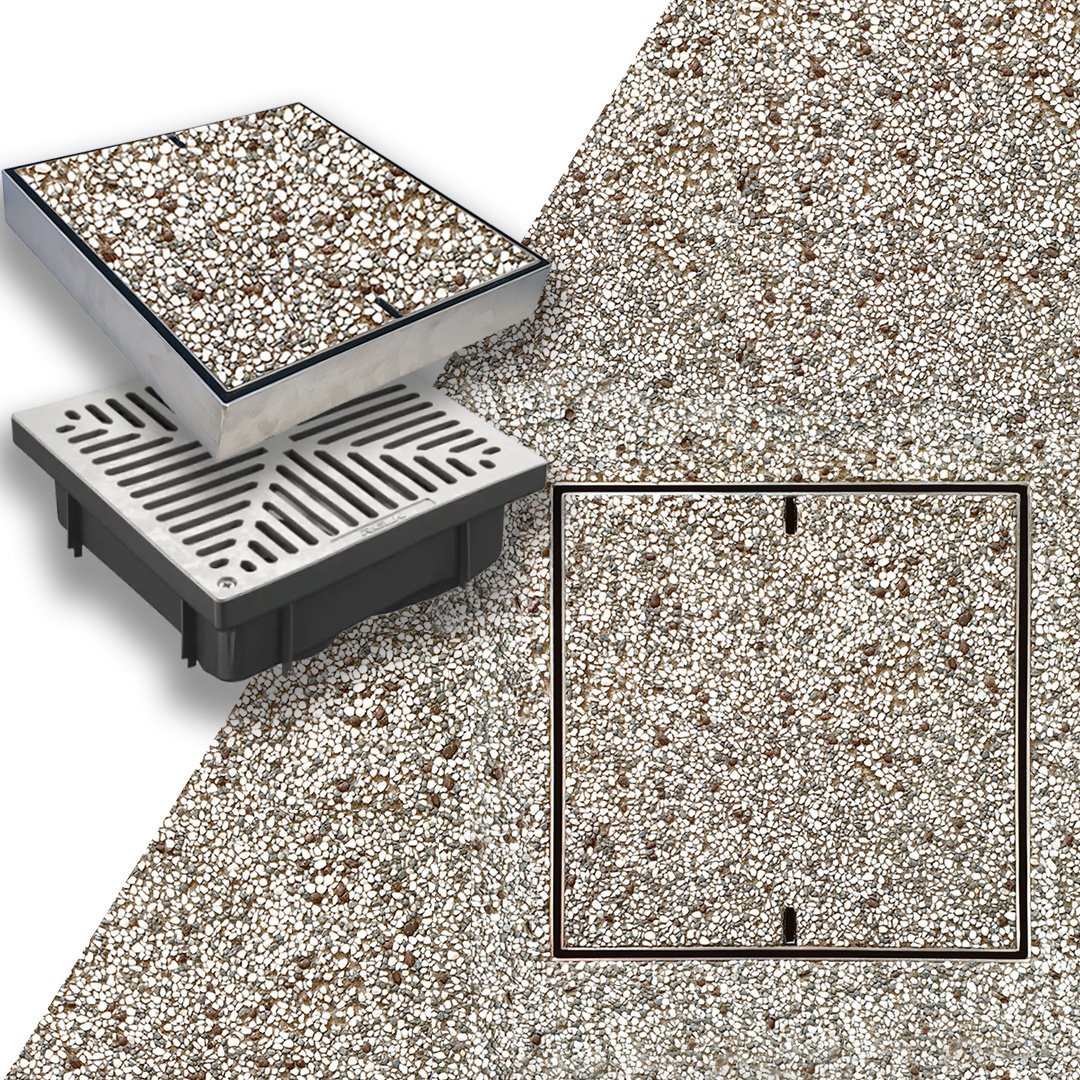
The standard in aesthetic finishes
HIDE Drain Covers
"How do HIDE Drain Covers perform for flow rate and water management"?
Learn more:
<article>
<p>
<a href="https://info.skimmerlids.com.au/drain-knowledge-centre">
← Back to HIDE Drain Knowledge Centre
</a>
</p>
<h1>How do HIDE Drain Covers perform for flow rate and water management?</h1>
<p>
HIDE Drain Covers are designed for surface water drainage in premium outdoor spaces, replacing visible grates with a discreet perimeter gap. In summary, their performance depends on cover size, gap width, falls and pipework. This guide explains indicative flow rates and how to use HIDE within a complete drainage design.
</p>
<!-- SECTION 1: FLOW CAPACITY OVERVIEW -->
<section>
<h2>How much water can a HIDE Drain Cover handle?</h2>
<p>
Each HIDE Drain Cover has a tested indicative flow rate based on size, style and gap width. First, use these figures as a guide; next, combine them with your project’s rainfall and catchment data. Simply put, the final capacity depends on the whole drainage system, not just the cover.
</p>
<h3>What are the flow rates for square HIDE Drain Covers?</h3>
<p>
The table below shows indicative flow rates for HIDE square Drain Covers. These point drains suit localised low spots, courtyards and similar areas. For example, the larger 656 mm square cover can handle over 140 litres per minute under test conditions.
</p>
<table>
<thead>
<tr>
<th>SKU</th>
<th>Product</th>
<th>Nominal size</th>
<th>Indicative flow rate*</th>
</tr>
</thead>
<tbody>
<tr>
<td>HDC214</td>
<td>Square Drain Cover</td>
<td>214 mm square</td>
<td>46 L/min</td>
</tr>
<tr>
<td>HDC314</td>
<td>Square Drain Cover</td>
<td>314 mm square</td>
<td>67.6 L/min</td>
</tr>
<tr>
<td>HDC342</td>
<td>Square Drain Cover</td>
<td>342 mm square</td>
<td>73.6 L/min</td>
</tr>
<tr>
<td>HDC656</td>
<td>Square Drain Cover</td>
<td>656 mm square</td>
<td>141.1 L/min</td>
</tr>
</tbody>
</table>
<h3>What are the flow rates for HIDE Linear Drain Covers?</h3>
<p>
HIDE Linear Drain Covers use a continuous perimeter gap and modular lengths.
The gap can be set at 5 mm or opened up to a maximum of 7 mm. To compare, increasing the gap increases potential flow but also changes appearance, debris size and safety considerations.
</p>
<table>
<thead>
<tr>
<th>Product</th>
<th>Nominal length</th>
<th>Gap</th>
<th>Indicative flow rate*</th>
</tr>
</thead>
<tbody>
<tr>
<td>Concrete Infill Linear Drain</td>
<td>1000 mm per module</td>
<td>5 mm</td>
<td>107.6 L/min</td>
</tr>
<tr>
<td>Concrete Infill Linear Drain</td>
<td>1000 mm per module</td>
<td>7 mm</td>
<td>150.6 L/min</td>
</tr>
<tr>
<td>Tile Inlay Linear Drain</td>
<td>1210 mm per module</td>
<td>5 mm</td>
<td>130.10 L/min</td>
</tr>
<tr>
<td>Tile Inlay Linear Drain</td>
<td>1210 mm per module</td>
<td>7 mm</td>
<td>182.63 L/min</td>
</tr>
</tbody>
</table>
<p>
<strong>Disclaimer:</strong> This flow rate information is a general guide and may vary significantly depending on installation-specific factors like slope (fall), water pressure and hydraulic conditions. For exact performance, site-specific analysis or consultation with a drainage engineer is recommended.
</p>
</section>
<!-- SECTION 2: SIZING & RAINFALL -->
<section>
<h2>How do I choose the right HIDE drain size for my rainfall and catchment?</h2>
<p>
First, estimate the catchment area and design rainfall intensity with your engineer or plumber. Next, compare those numbers with the indicative flow rates for the HIDE square and linear drains. Finally, increase inlet length or number of drains where rainfall is high or the area is complex.
</p>
<h3>What if I am unsure which size is sufficient?</h3>
<p>
In summary, treat the HIDE flow tables as design guidance, not guarantees.
Common mistakes include underestimating rainfall, ignoring wind effects and forgetting future changes such as added roof areas. When in doubt, ask a hydraulic designer to confirm final sizing for local conditions. Add extra drains where necessary.
</p>
</section>
<!-- SECTION 3: HIDDEN COVER VS OPEN GRATE -->
<section>
<h2>Will a hidden HIDE Drain Cover slow down water compared to an open grate?</h2>
<p>
A HIDE Drain Cover uses a controlled perimeter gap instead of visible bars.
Simply put, the opening area is shaped differently, but well-designed HIDE drains manage surface water effectively in typical residential and light commercial settings when hydraulics and falls are correct.
</p>
<h3>How can I avoid performance issues with hidden covers?</h3>
<p>
To avoid problems, ensure the overall system is designed properly.
Key takeaway: performance issues usually come from poor falls, insufficient outlets or blocked gaps, not from the HIDE cover itself.
</p>
<ul>
<li>Position inlets at natural low points with adequate fall toward them.</li>
<li>Provide enough drain length and pipe capacity for the catchment.</li>
<li>Keep the 5–7 mm gaps free of grout, sealant and debris.</li>
<li>Coordinate cover locations with the landscape and hydraulic plans.</li>
</ul>
</section>
<!-- SECTION 4: PONDING & FLOODING -->
<section>
<h2>How do HIDE Drain Covers help prevent ponding and nuisance flooding?</h2>
<p>
HIDE Drain Covers help by discreetly placing inlets where water naturally collects and keeping them aligned with your paving pattern. For example, a linear HIDE drain at a door threshold can intercept water before it enters an internal space, reducing ponding at the doorway.
</p>
<h3>What are common mistakes that cause ponding around HIDE drains?</h3>
<p>
Common mistakes include insufficient falls, drains set too high, too few inlets and blocked perimeter gaps. Simply put, a HIDE Drain Cover cannot fix poor overall drainage design; it must be integrated into a well-planned hydraulic system.
</p>
</section>
<!-- SECTION 5: POINT DRAINS VS LINEAR DRAINS -->
<section>
<h2>What is the difference between point drains and linear drains, and where does HIDE fit?</h2>
<p>
Point drains collect water at a single low spot, while linear drains collect water along a continuous line, such as along a pool edge or doorway. HIDE offers both square “point” drains and modular linear drains so you can match the layout to your landscape design.
</p>
<h3>When should I use square versus linear HIDE drains?</h3>
<p>
First, identify where water naturally collects; next, decide whether that is a single low point or a long threshold. Key takeaway: square drains suit localised lows, while linear drains suit edges and long runs that need a continuous catch line.
</p>
<table>
<thead>
<tr>
<th>Drain style</th>
<th>Typical HIDE product</th>
<th>Best for</th>
</tr>
</thead>
<tbody>
<tr>
<td>Point drain</td>
<td>HDC square Drain Covers (for example HDC214, HDC314)</td>
<td>Localised lows, courtyard centres, small catchments</td>
</tr>
<tr>
<td>Linear drain</td>
<td>HIDE Linear Drain Covers (concrete infill or tile inlay)</td>
<td>Door thresholds, pool edges, long runs along paving</td>
</tr>
</tbody>
</table>
</section>
<!-- SECTION 6: DEPTHS & INLAY THICKNESS -->
<section>
<h2>What HIDE tray depths are available for different surface finishes?</h2>
<p>
Most HIDE kits are available in a sequence of tray depths to suit common inlay thicknesses. First, confirm the actual thickness of your tile, stone, concrete or decking; next, choose the tray depth that best suits it so the finished surface ends up flush and safe for pedestrians. Extra tray depth is ok as it allows for Adhesive and can be packed up by a maximum of 8 mm using the supplied '2 mm perspex height adjuster' and additional Adhesive.
</p>
<h3>Which tray depths suit typical inlay materials?</h3>
<p>
The table below is a simple guide. In summary, shallower trays suit thin tiles, while deeper trays suit thicker stone or concrete toppings, with some variation between products and regions. The product code indicates the inlay thickness. For instance, a HIDE Drain Cover for 30mm thick tile, has a 30 in the code. HDC314-30. The actual internal depth is 32 mm to allow 2 mm for Adhesive.
</p>
<table>
<thead>
<tr>
<th>Tray depth option</th>
<th>Approximate inlay thickness it suits</th>
<th>Typical surface materials</th>
</tr>
</thead>
<tbody>
<tr>
<td>Shallowest tray</td>
<td>Up to about 12 mm</td>
<td>Thin tiles, some porcelain formats</td>
</tr>
<tr>
<td>Tray depth 2</td>
<td>Up to about 22 mm</td>
<td>Standard external tiles</td>
</tr>
<tr>
<td>Tray depth 3</td>
<td>Up to about 32 mm</td>
<td>Stone or pavers in mid thicknesses</td>
</tr>
<tr>
<td>Tray depth 4</td>
<td>Up to about 42 mm</td>
<td>Wet-pour concrete toppings and robust screeds</td>
</tr>
<tr>
<td>Tray depth 5</td>
<td>Up to about 52 mm</td>
<td>Thicker stone or built-up systems</td>
</tr>
<tr>
<td>Deepest tray</td>
<td>Up to about 62 mm</td>
<td>Heavy or multi-layer surface finishes</td>
</tr>
</tbody>
</table>
<p>
Kits up to around 42 mm depth are ideal for wet-pour concrete, with around 40 mm of concrete providing a robust, durable inlay. Warning: Some very large drains, such as HDC656, are deliberately limited to shallower tray depths to keep weight manageable for safe lifting.
</p>
</section>
<!-- SECTION 7: DRAIN VS ACCESS COVER BEHAVIOUR -->
<section>
<h2>Do HIDE Access Covers have flow rates like HIDE Drain Covers?</h2>
<p>
No. HIDE Access Covers (HAC) are designed for dry access to inspection points, not for surface water entry. They have a much smaller perimeter gap of roughly
1 mm. Simply put, flow-rate data applies to HIDE Drain Covers (HDC), not to Access Covers.
</p>
<h3>Can I use a HIDE Access Cover where surface water needs to drain?</h3>
<p>
Warning: do not use a HIDE Access Cover where surface water must enter the drainage system through the lid. Use HAC where you want concealed, dry access
to plumbing; use HDC Drain Covers where surface water needs to flow into the drain below.
</p>
</section>
<!-- FAQ SECTION -->
<section>
<h2>HIDE Drain Cover performance and flow rate: FAQ</h2>
<h3>Do the published flow rates guarantee performance on my project?</h3>
<p>
No. The published flow rates are indicative only and based on test conditions.
Key takeaway: actual performance depends on falls, pipework, water pressure and overall hydraulic design, so final sizing should always be confirmed by a drainage engineer.
</p>
<h3>Does increasing the linear drain gap from 5 mm to 7 mm always help?</h3>
<p>
Increasing the gap from 5 mm to 7 mm increases the opening area and potential flow rate. However, you must also consider safety, debris size, visual lines and local regulations. In summary, treat gap changes as a design decision, not just a way to “force” more water through.
</p>
<h3>Are HIDE Drain Covers suitable as the only protection for major storm events?</h3>
<p>
HIDE Drain Covers are designed for surface water drainage in landscaped and hardscape areas, not as the sole protection for extreme storm events.
Key takeaway: HIDE should sit within a properly engineered storm water system, alongside appropriate pipework, overflows and backup measures.
</p>
<p>
For where to use HIDE in real projects, see
<a href="https://info.skimmerlids.com.au/drain-applications-locations">
Where can I use HIDE Drain and Access Covers?
</a>
, and for buying options in your region, visit
<a href="https://info.skimmerlids.com.au/how-to-buy-hide-kits">
How do I buy a HIDE Drain or Access Cover kit?
</a>.
</p>
</section>
</article>
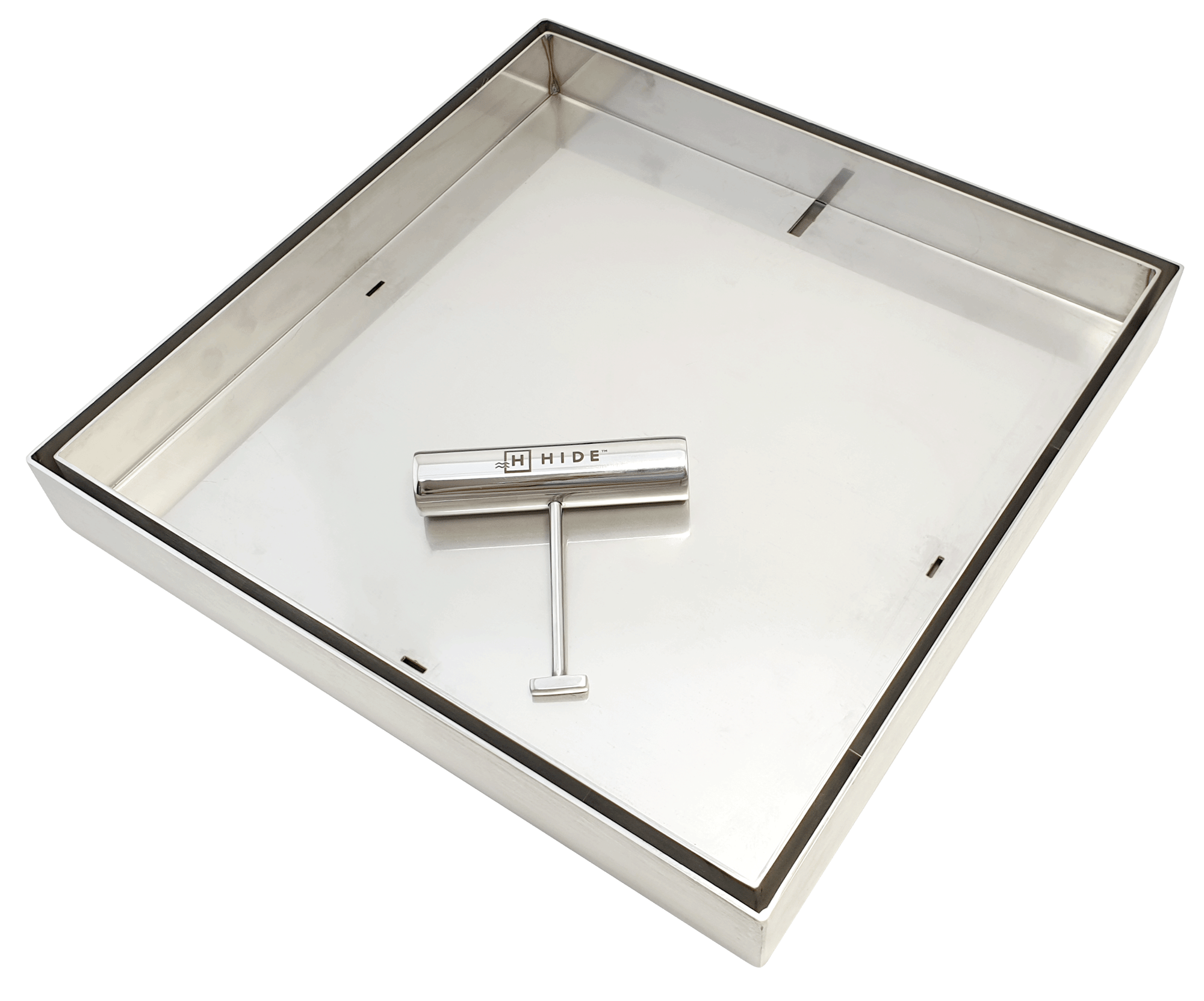
316L Marine Grade Stainless Steel
HIDE Drain Covers are Australian made from 316L marine grade stainless steel for exceptional corrosion resistance and long-term performance in harsh outdoor and coastal environments. This premium alloy stands up to pool chemicals, salt air, and constant exposure to water and weather, helping prevent rust, staining, and tea-staining. The result is a strong, low-maintenance drain cover that keeps its clean, refined appearance for years.
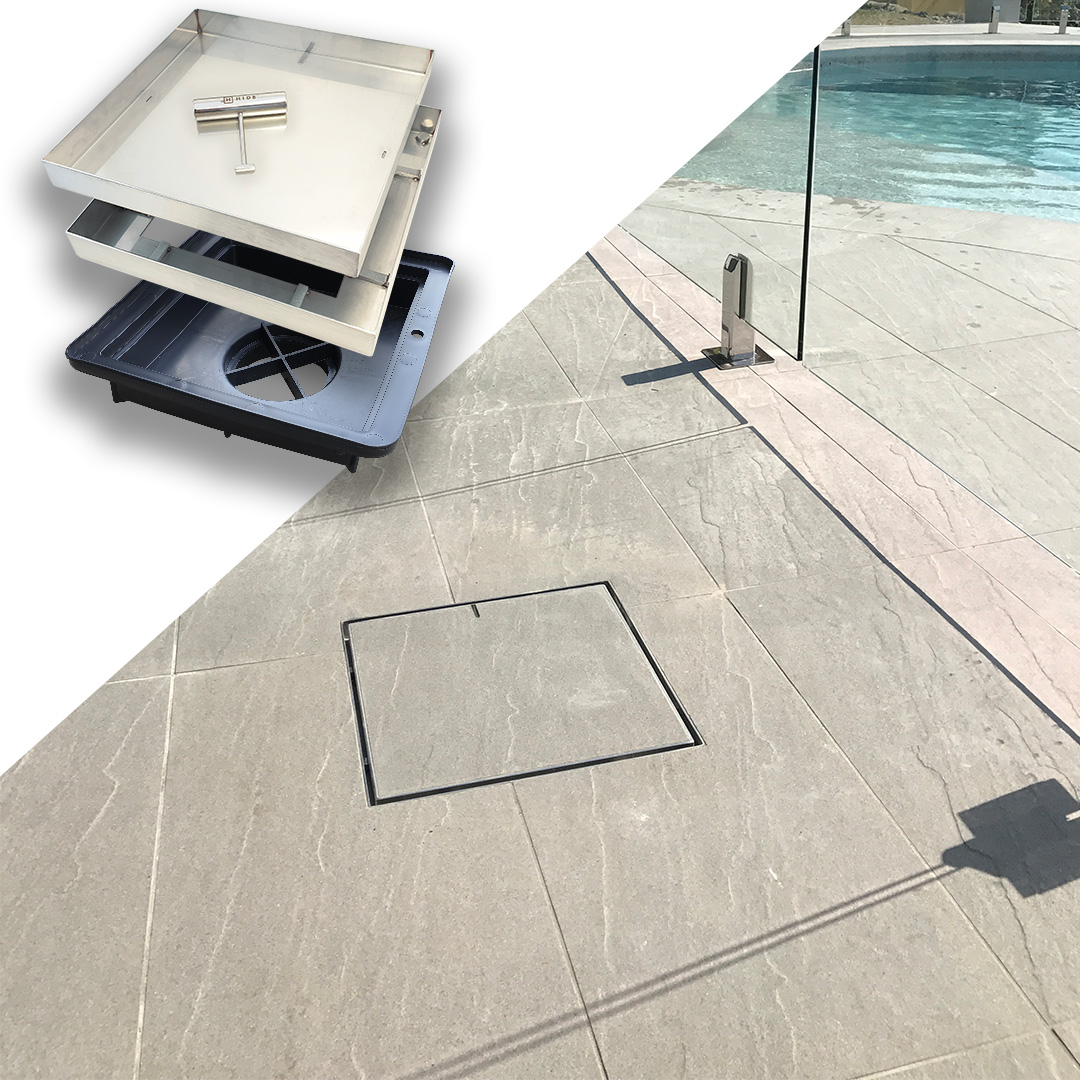
Blends in seamlessly
HIDE Drain Covers are Australian made to blend in seamlessly with your landscape. Simply install your chosen surface material—tile, stone, paver or concrete—into the lid to create a continuous, flush finish that hides the drain from view. The result is a clean, cohesive outdoor surface that remains safe underfoot, reducing trip hazards and visual clutter around pools, patios and pathways.
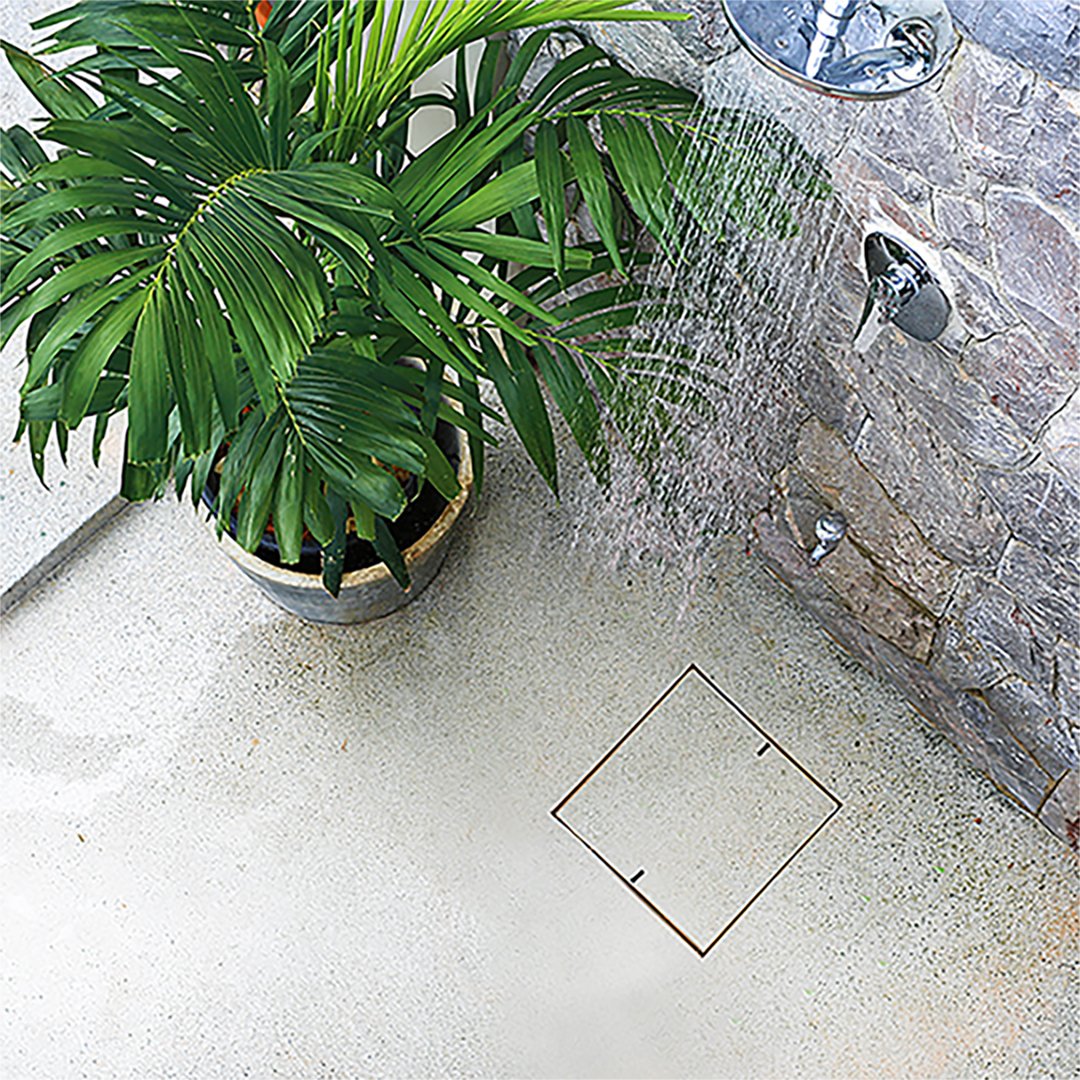
Tile or Concrete inlay
HIDE Drain Covers are engineered for tile or concrete inlay, with lid depths of 10, 20, 30, 40, 50 and 60 mm to suit a wide range of landscape materials and build-ups. The 40 mm option is ideal for wet-pour concrete, providing ample cover while maintaining a precise, flush finish that’s safe underfoot. Drains are available in 214, 314, 342 and 656 mm square sizes, allowing designers and installers to match the cover to both site conditions and aesthetic requirements.