Built to Endure: Why 316 Stainless Steel Belongs in Premium Hardscapes
Published by
Skimmer Lids Pty Ltd
on
The material choice behind a better hardscape finish
In premium exterior spaces, every visible detail matters.
Download Revit-ready BIM Files
Architects, builders and landscape professionals spend an enormous amount of time selecting stone, porcelain, concrete, pavers and surface finishes. Yet the quality of the finished hardscape can still be compromised by the service covers that sit within it — skimmer lids, drain covers, inspection points, utility covers and access hatches.
These covers are not decorative extras. They are working components exposed to water, salt, cleaning chemicals, UV, foot traffic and constant maintenance access.
That is why material choice matters.
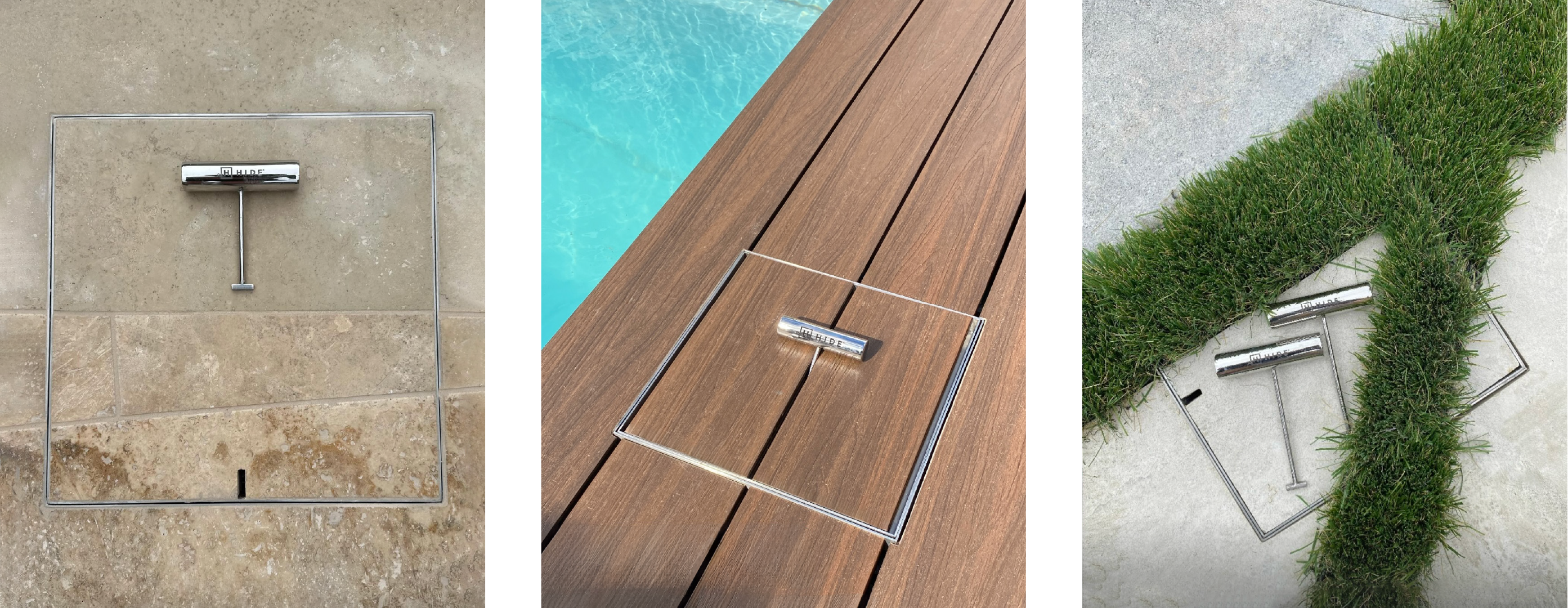
For more than 12 years, HIDE has served the pool, landscape, and construction industries with premium inlay cover systems trusted by trades who need a finish that is clean, durable, and built to last. HIDE systems are designed to accept the surrounding surface finish as an inlay, allowing access covers to sit flush and integrate with tile, stone, pavers, concrete, decking and other hardscape materials. This aligns with the existing HIDE position that exterior access should be integrated into the design, not treated as an afterthought.
At the centre of that performance is one key material: 316L marine-grade stainless steel.
Why HIDE chooses 316L stainless steel
HIDE uses 316L stainless steel because exterior covers live in harsh environments.
They are exposed to pool water, chlorides, salt air, cleaning products, grit, moisture and temperature changes. Under these conditions, materials can discolour, weaken, warp, or become difficult to operate.
316L stainless steel is different.
It is strong, stable, corrosion-resistant and visually refined. It is the same class of material used in marine environments, architectural detailing, premium hardware, and demanding exterior applications.
For specifiers, this matters because an exterior cover is not just judged on how it looks on day one. It is judged on how it performs after years of exposure, cleaning and use.
A well-designed 316L stainless steel cover system supports dimensional stability, edge durability, cleaner junctions against tile and concrete, long-term performance in wet zones, and controlled access through the HIDE Key system. These benefits are already central to HIDE’s exterior cover positioning.
The self-healing advantage of stainless steel
One of the most important properties of stainless steel is its passive layer.
316L stainless steel forms a very thin chromium-oxide film on its surface. This invisible layer helps protect the steel from corrosion. If the surface is scratched under normal conditions, the passive layer can reform when exposed to oxygen.
This is why stainless steel is so valuable in exterior environments. It is not simply a coated material relying on a painted or plated surface. Its corrosion resistance is part of the alloy itself.
For hardscape covers, this is a major advantage. A cover may be lifted, cleaned, walked on and exposed to outdoor conditions for years. The material needs to withstand real use, not just showroom conditions.
Why 316L is better suited to pool and coastal environments
Pool areas, coastal homes, resorts, podium landscapes and common areas can all expose covers to chloride-rich conditions.
Chlorides are harsh on materials. They can accelerate corrosion, staining and surface breakdown when the wrong materials are used. This is where 316L stainless steel stands apart.
The molybdenum content in 316L improves resistance to chloride attack compared with lower-grade stainless steels such as 304. The low-carbon “L” grade also helps preserve corrosion resistance, particularly around fabricated or welded components.
For architects and builders, the practical benefit is simple: 316L stainless steel is better suited to demanding wet and exterior environments where long-term performance matters.
This is why HIDE uses 316L marine-grade stainless steel across relevant cover assemblies, including systems with a 2 mm thick 316L stainless steel frame and removable flush-fit lid or grate designed to accept the site-installed finish.
Plastic covers are not the premium solution
Plastic covers may appear to solve the problem at first. They can be lightweight, inexpensive and easy to mould. But in high-quality exterior environments, they often introduce their own weaknesses.
Pool chemicals, UV exposure, heat, foot traffic and repeated opening can all take a toll on plastic components. Over time, plastic covers may fade, yellow, warp, crack or become brittle. Locking mechanisms can be small, fragile or prone to damage. In many cases, the actual warranty period offered on plastic components is far shorter than the lifespan expected of the surrounding hardscape.
That creates a mismatch.
The paving may be designed to last for decades, but the cover becomes the weak point in the surface.
In premium projects, this is not good enough. Architects and builders need covers that match the quality and expected life of the materials around them.
Strength matters at the service layer
Exterior covers are working parts of a building or landscape. They are lifted, replaced, walked over, cleaned around and sometimes exposed to heavy daily use.
This is where stainless steel has a clear engineering advantage.
316L stainless steel offers strength, rigidity and stability that plastic materials cannot match. It is far less prone to warping, twisting or brittle failure under normal exterior use. It also provides a more secure and substantial base for inlay materials such as stone, porcelain and concrete.
This is especially important around edges. Many long-term failures in hardscapes begin at vulnerable junctions, corners and service openings. HIDE’s stainless steel frame and lid assemblies help protect these areas while keeping the surface flush and visually aligned.
The result is not only a cleaner finish, but a more durable one.
A better finish for architects and trades
The best hardscape details do not draw attention to themselves.
A HIDE 316L stainless steel cover is designed to sit flush within the surrounding surface and accept the same finish material as the project. This helps the cover disappear visually while keeping essential access intact.
For architects, this supports design intent.
For builders and trades, it provides a repeatable, high-quality system that can be installed with confidence.
For clients, it delivers a finished space that feels more refined, more durable and more valuable.
This is why HIDE has become the choice of trades across the industry for more than 12 years. The systems are not designed as temporary plastic inserts. They are designed as premium construction components for serious exterior work.
Stainless steel still needs the right care
316L stainless steel is highly durable, but it should still be cared for correctly.
In pool and coastal environments, salt, dust and airborne contaminants can settle on the surface. If left in place, these deposits may create brown surface marks often referred to as tea staining.
Tea staining is not the same as structural rust. It is usually surface contamination sitting on the stainless steel, not the stainless steel failing.
The best approach is simple:
- rinse regularly with clean fresh water
- clean with mild, pH-neutral soapy water
- wipe with a soft cloth in the direction of the grain
- rinse thoroughly
- dry the surface where possible
- avoid harsh chemical residues sitting on or around the lid
Regular light cleaning helps keep the passive layer clear and allows the stainless steel to perform as intended.
Never use acid on or near stainless steel
Acid cleaners should never be used on or near stainless steel covers.
Brick acid, hydrochloric acid, muriatic acid and aggressive acidic cleaners can strip or damage the protective passive layer. They can also leave etched marks, streaking or staining that may appear soon after cleaning.
This is misuse, not material failure.
Where stainless steel is installed near stone, tile, grout, paving or concrete, care should be taken during cleaning and handover to ensure acids are not splashed, sprayed or washed across the cover.
The simplest rule is this: no acid near stainless steel.
The sustainability advantage
Stainless steel also has an important end-of-life advantage.
Unlike many mixed plastic components, stainless steel is highly recyclable and widely recovered. It does not rely on colour coatings or fragile surface treatments to appear premium. It is a durable, long-life material that can remain in service for decades when correctly specified, installed and maintained.
This makes it a better fit for projects where lifecycle value matters.
A cheaper cover that needs replacing sooner is not always cheaper. It may increase maintenance, create callbacks, compromise the finish and become a recurring weak point in the hardscape.
A 316L stainless steel cover is a longer-term decision.
Built to last. Designed to disappear.
HIDE chose 316L stainless steel because exterior covers need to do more than fill a hole.
They need to protect premium surface finishes. They need to sit flush. They need to remain serviceable. They need to resist harsh environments. They need to support a refined architectural outcome. And they need to keep performing long after the project is complete.
Plastic covers may offer a short-term answer, but they are not the benchmark for premium exterior detailing.
316L stainless steel is.
For more than 12 years, HIDE has helped architects, builders, pool professionals and landscape trades deliver cleaner, safer and more durable hardscape finishes using high-quality inlay cover systems.
When the surrounding surface is built to last, the cover should be too.
That is why HIDE trusts 316L stainless steel.